The Weight of Code-Switching: What We Lose When We Perform Ourselves
Code-switching keeps us safe. It also costs us something. As a clinician, I've watched people carry that cost for decades — and I've watched what happens when they finally put it down.
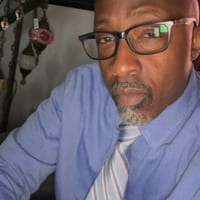
Michael Heaven, LCSW, ADN
Founder & Editor, CRAFT

There is a particular kind of exhaustion that doesn't show up on any clinical assessment. It doesn't have a diagnostic code. It doesn't get asked about in intake forms. But I've seen it in almost every Black professional, every first-generation college student, every person who has spent years navigating spaces that were not built for them. It is the exhaustion of code-switching — of performing a version of yourself that is acceptable to the room while keeping the real version somewhere safe and hidden.
Code-switching keeps us safe. I want to say that clearly, because the critique of it can sound like a critique of the people who do it — and that is not what this is. The ability to read a room, to modulate your presentation, to move between cultural registers with fluency — these are real skills, and in many environments they are genuinely protective. They have kept people employed. They have kept people alive.
What It Costs
But there is a cost. And the cost is not just tiredness at the end of the day, though it is that. The cost is the slow erosion of the felt sense of who you actually are. When you perform yourself long enough — when the performance is required for survival, not just preference — the performance and the person start to blur.
I've sat with people in therapy who could not answer the question 'what do you actually want?' Not because they were evasive, but because they genuinely didn't know. They had spent so long calibrating their wants to what was acceptable in the rooms they were in that they had lost access to the unfiltered version. The code-switch had become the default. The original was somewhere underneath, but it had been quiet for so long it was hard to hear.
When the performance is required for survival, the performance and the person start to blur. The code-switch becomes the default. The original goes quiet.
The Physiological Dimension
This is not just a psychological phenomenon. Research on the physiological effects of code-switching shows measurable increases in cortisol, blood pressure, and cardiovascular stress in people who regularly suppress their cultural identity in professional or institutional settings. The body keeps the score, as the saying goes — and the score of chronic self-suppression is written in the nervous system.
This is part of why cultural resonance is not a soft concept. When someone is in an environment where they don't have to code-switch — where their full self is not just tolerated but genuinely welcomed — the physiological response is measurable. Cortisol drops. The nervous system settles. The body stops spending energy on vigilance and starts spending it on something more useful.
What Happens When People Put It Down
I've watched what happens when people finally put the code-switch down. Not in every room — that is not always safe or wise. But in the rooms where it is safe. In the spaces where they are with people who know them, who share their cultural reference points, who don't require the performance.
What happens is not dramatic. It is quiet. People laugh differently. They take up more space. They say things they've been thinking for years without the usual editing. They remember things about themselves they had forgotten — preferences, opinions, ways of being that got suppressed somewhere along the way.
The work of CRAFT is, in part, the work of creating those spaces — and of helping people develop the discernment to know when the code-switch is serving them and when it is costing them more than it's worth. That discernment is not a luxury. For many people, it is the beginning of coming home to themselves.
Share this article
Ready to go deeper?
Explore our workshops and community interventions — or book a session with Michael directly.
About the author
Michael Heaven, LCSW, ADN
Michael is the founder of CRAFT and Black Swan Collective Interventions LLC. A licensed clinical social worker with a background in nursing, he writes about culture, identity, and the intersection of community cohesion and health equity. He believes the most powerful health interventions don't start in clinics — they start in culture.
Read more about CRAFTMore in Authenticity


