
Community as Mirror: How Being Witnessed Changes Who We Become
There is something that happens when you are truly seen by people who share your world. Not just accepted — seen. That experience doesn't just feel good. It rewires what you believe is possible for yourself.
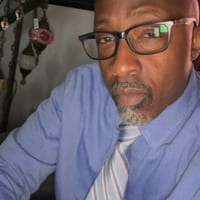
Michael Heaven, LCSW, ADN
Founder & Editor, CRAFT

There is something that happens when you are truly seen by people who share your world. Not just accepted — seen. When someone looks at you and recognizes not just your face but your context, your history, your particular way of carrying yourself through a world that has not always been kind. That experience doesn't just feel good. It changes something.
Being witnessed by community — genuinely witnessed, not just observed — rewires what you believe is possible for yourself. This is not a metaphor. It is a description of a real psychological process, one that has profound implications for how we think about growth, healing, and the conditions under which people become who they are capable of being.
The Mirror Function of Community
Developmental psychology has long understood that the self is formed in relationship. We learn who we are, in part, by seeing ourselves reflected in the eyes of others. When those reflections are accurate and affirming — when the people around us see us clearly and respond to what they see with care — we develop a stable, coherent sense of self. When the reflections are distorted or hostile, the damage is real and lasting.
Community functions as a mirror in this sense. The people around you are constantly reflecting something back to you about who you are and what you're worth. The question is whether those reflections are accurate — whether they see you fully, or only partially; whether they reflect your potential, or only your limitations.
Being witnessed by community — genuinely witnessed, not just observed — rewires what you believe is possible for yourself.
What Distorted Mirrors Do
For Black Americans, the dominant cultural mirrors have often been distorted. The images reflected back — through media, through institutions, through the accumulated weight of a society that has historically defined Blackness in terms of deficit and danger — have not been accurate. They have been partial at best, hostile at worst.
The psychological effect of sustained exposure to distorted mirrors is not trivial. It shapes what people believe they are capable of. It shapes what they feel entitled to want. It shapes the internal voice that comments on every attempt to grow, every risk taken, every moment of reaching for something more.
This is why representation matters — not as a feel-good gesture, but as a psychological necessity. Seeing people who look like you, who come from where you come from, doing the things you want to do — that is not inspiration in the soft sense. It is evidence. It is the mirror showing you something true about what's possible.
Building Communities That See Clearly
The work of building communities that function as accurate mirrors is specific. It requires intentionality about who is in the room, what stories get told, whose experiences are centered, and what the community's implicit beliefs are about what its members are capable of.
It requires the discipline to resist deficit framing — to refuse the habit of defining the community by its challenges rather than its assets, its wounds rather than its wisdom, its distance from some external standard rather than its own internal richness.
And it requires the courage to be seen — to show up fully enough that the mirror has something real to reflect. That is the vulnerability that community asks of us. And it is, in my experience, the vulnerability that makes everything else possible.
Share this article
Ready to go deeper?
Explore our workshops and community interventions — or book a session with Michael directly.
About the author
Michael Heaven, LCSW, ADN
Michael is the founder of CRAFT and Black Swan Collective Interventions LLC. A licensed clinical social worker with a background in nursing, he writes about culture, identity, and the intersection of community cohesion and health equity. He believes the most powerful health interventions don't start in clinics — they start in culture.
Read more about CRAFTMore in Community


