Building Resilience Through Community: Why You Were Never Meant to Heal Alone
Resilience is not a personal achievement. It is a collective one. The most durable strength any of us carries was built in relationship — and it can only be rebuilt there too.
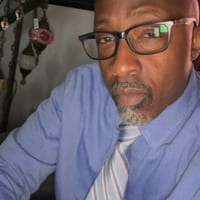
Michael Heaven, LCSW, ADN
Founder & Editor, CRAFT

We have a resilience problem in this country — not a shortage of it, but a misunderstanding of what it is. We've turned resilience into a personal virtue. A character trait. Something you either have or you don't. And in doing so, we've made it into something you have to earn alone.
But resilience has never been a solo achievement. The most durable strength any of us carries was built in relationship — in the presence of people who held us when we couldn't hold ourselves, who believed in our capacity before we could access it, who showed us by their own survival that survival was possible. You were never meant to heal alone. And the evidence, both clinical and historical, is unambiguous on this point.
What the Research Actually Shows
The science of resilience has shifted dramatically over the past two decades. Early models focused on individual traits — optimism, self-regulation, cognitive flexibility. These matter. But the research has increasingly pointed toward something more fundamental: the quality of a person's social connections is the single strongest predictor of their ability to recover from adversity.
This holds across populations, across types of trauma, across age groups. Children who survive adverse childhood experiences with their development intact almost always have at least one stable, caring adult in their lives. Adults who recover from major loss or trauma are significantly more likely to have strong community ties. The variable that keeps showing up is not internal. It is relational.
The most durable strength any of us carries was built in relationship — and it can only be rebuilt there too.
Why Black Communities Already Know This
There is a reason Black communities have survived what they have survived. It is not because Black people are individually tougher, more stoic, or more capable of enduring pain. It is because Black communities have historically built extraordinary structures of mutual support — the church, the extended family, the neighborhood network, the informal economy of care that kept people fed and housed and held when institutions failed them.
This is not a story about suffering. It is a story about architecture — the architecture of collective resilience that Black communities built under conditions designed to destroy it. That architecture is a resource. It is also, in many places, under strain — from economic displacement, from the atomizing effects of digital life, from the particular exhaustion of navigating a society that still requires constant vigilance.
Rebuilding What Strain Has Weakened
The work of building resilience through community is not abstract. It is specific. It looks like creating spaces where people can be honest about what they're carrying — not performing strength, but actually sharing the weight. It looks like intergenerational connection, where the wisdom of people who have already survived hard things gets passed to people who are in the middle of hard things.
It looks like the kind of community that Black Swan Collective Interventions LLC works to build: not a support group in the clinical sense, but a genuine ecosystem of mutual accountability and care. Where showing up for someone else is understood as part of how you show up for yourself.
If you are trying to become more resilient and you are doing it alone, I want to gently suggest that you are working against the design. Resilience is not a destination you reach by yourself. It is a capacity you build with others. Find your people. Let them find you. That is not the soft version of the work. That is the work.
Share this article
Ready to go deeper?
Explore our workshops and community interventions — or book a session with Michael directly.
About the author
Michael Heaven, LCSW, ADN
Michael is the founder of CRAFT and Black Swan Collective Interventions LLC. A licensed clinical social worker with a background in nursing, he writes about culture, identity, and the intersection of community cohesion and health equity. He believes the most powerful health interventions don't start in clinics — they start in culture.
Read more about CRAFTMore in Resilience


